
How fast can you deploy after a flood or power outage?
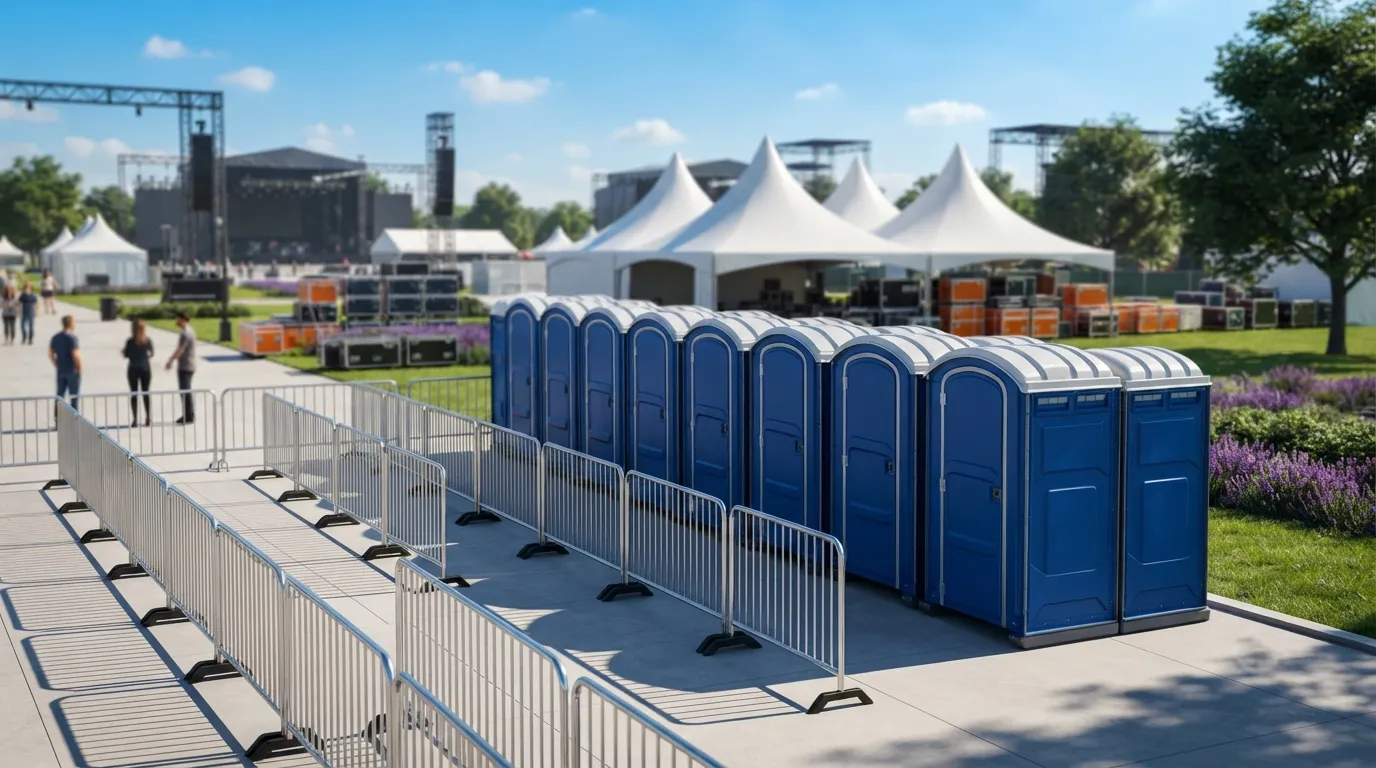
Speed matters most in the first 48 hours. Warwick Porta Pros keeps standard units, ADA accessible units and handwashing stations staged for rapid dispatch, and most disaster calls in Warwick get a truck moving the same day. If a septic system has backed up because of flooding, we also run emergency septic service alongside toilet placement, since a failed tank and a lost restroom often show up together after a storm. West Warwick sits 7.1 miles west of Warwick, and East Providence is 13.8 miles northeast, so a regional event that hits both towns does not stretch our routes past what we can cover in a single day. For larger incidents, a restroom trailer can replace a whole bank of standard units where crews or displaced residents need something closer to a real bathroom, including a flushing fixture and a sink. We also bring temporary fencing when a site needs to keep foot traffic away from debris piles or damaged structures, and a light tower or temporary power pole if the area has no working electricity. None of this is theoretical planning. It is the same gear we use for construction site services, redeployed fast when the need turns into an emergency instead of a scheduled project.
What sanitation do shelters and relief sites actually need?
A relief site needs potable water, working toilets and a way to wash hands, and OSHA 1926.51(a)(1) requires an adequate supply of potable water at any place of employment, which covers a staffed shelter or command post. Toilet counts follow OSHA 1926.51(c)(1): one toilet facility for 20 workers or fewer, then a toilet seat and urinal per 40 workers once headcount climbs past that, and per 50 workers at 200 or more. A displaced household does not need an OSHA count, but a staging area full of utility crews, National Guard personnel or volunteers does, and we size the order to match. Handwashing is a separate requirement under 29 CFR 1910.141(d)(2), which calls for soap and towels or a hand-drying device; hand sanitizer alone does not satisfy it, so we pair every deployment of portable sinks with real soap and drying stock, not just a hand sanitizer station. If the relief site includes any painting, coating or pest treatment work as part of cleanup, OSHA 1926.51(f)(1) requires washing facilities for that contaminant exposure specifically, and we can bring extra sinks for that crew. For anyone with a mobility need, ADA Standards section 213.2 requires at least one accessible unit in any cluster of portable toilets, even a small one, and we always include that unit rather than waiting to be asked.
What if debris and standing water need to be cleared too?
Cleanup after a flood or wind event usually means debris removal alongside sanitation, and a roll-off dumpster handles that load without needing a second contractor on site. A 20 yard dumpster works for a household cleanout; a 30 yard or 40 yard dumpster fits a block-level response with downed trees and ruined drywall. Placement takes about 60 feet of straight clearance behind the delivery truck, so we walk the access route with whoever is running the site before the truck ever leaves our yard. If the relief effort includes temporary trailers for staff or storage of donated supplies, a storage container or mobile office trailer can go down next to the restrooms in the same trip. Standing water and clogged septic lines often mean a residential tank needs pumping ahead of schedule; a typical 1,000 gallon tank is pumped every 3 to 5 years under normal use, but a flood event can force an early pump-out, which is why our septic pumping crews carry the same trucks used for septic tank cleaning on any storm call. Warwick's mix of coastal and inland neighborhoods means some blocks flood hard while others stay dry, so we build each relief order around the specific street, not a citywide guess. Anyone unsure how many units a shelter or staging site needs can start with our guide to sizing a portable toilet order before calling.
How much does emergency sanitation cost during a disaster response?
| unit | duration | typical price |
|---|---|---|
| standard | day | $150 |
| standard | week | $200 |
| ada | day | $230 |
| dumpster | day | $75 |
| septic | day | $250 |
Emergency response pricing runs close to standard daily rates, not a special disaster markup, and a full cost breakdown is on our pricing page.
Do you charge extra for after-hours or weekend disaster calls?
Weekend and after-hours dispatch during an active emergency typically falls in the $400 to $700 range for the service call itself, on top of unit rental. We quote that up front before dispatch, never after the truck arrives.
How many toilets does a shelter of 100 people need?
Under OSHA 1926.51(c)(1), 100 workers falls in the 20-to-199 band, needing one toilet seat and one urinal per 40 people, which works out to roughly three units. Shelters housing the general public rather than workers should still plan close to that ratio for comfort.
Can you deliver to a site with no power or water?
Yes. Standard portable units need neither, and we bring a light tower or temporary power pole if the site needs lighting or a power source for pumps, generators or communication equipment.
What happens if our septic tank fails during a storm?
Call our emergency septic service line first. A failed tank during flooding usually means groundwater intrusion or a blocked leach field, and a pump-out plus inspection typically resolves it within the same visit.
Next step
Get a delivery date
Tell us the address, the dates and the headcount. We size the order and confirm the route.