
How Do Porta Potties Work?
Picture a plastic box roughly 44 by 48 inches on the ground and about 92 inches tall. Under the seat sits the holding tank, and that's the whole system. There's no water line running in and no sewer line running out. When you flush a toilet at home, water carries waste to a pipe. A standard porta potty rental skips that step entirely. The chemical mix in the tank, often a blue dye with deodorizers and enzymes, breaks down solids and keeps smell down between pump-outs. A construction worker walking to the porta potty on a job site in Warwick doesn't need to worry about a water hookup because there isn't one. That's what makes these units drop anywhere: a parking lot, a wooded lot 7.1 miles out toward West Warwick, a fenced construction pad. Service techs come out on a schedule, vacuum the tank empty, rinse it, and recharge it with fresh chemical. If you're trying to figure out how many units a site needs, ratios exist for that under OSHA 1926.51(c), which is why crews with 20 or fewer workers usually rent one unit and add more as headcount climbs.
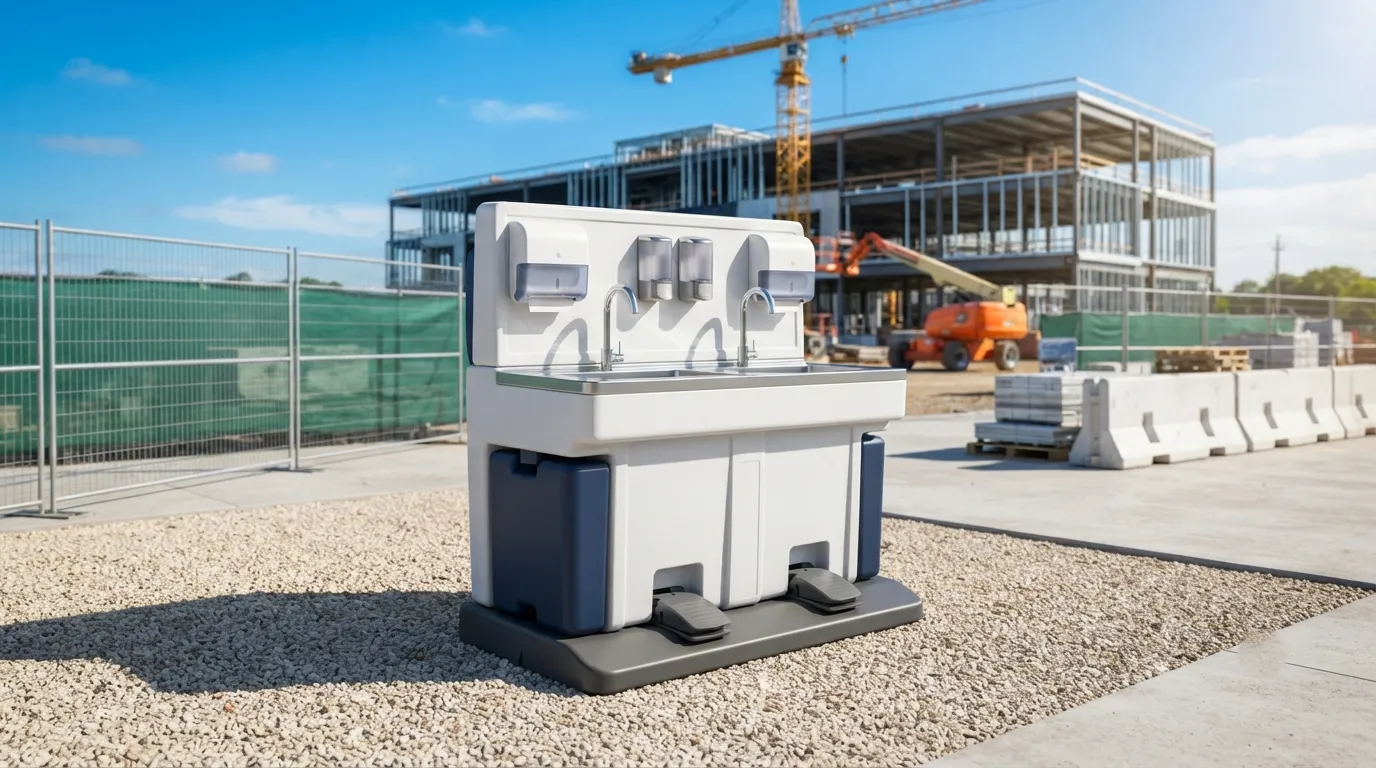
How Does a Portable Sink Work?
A portable sink rental runs on two separate tanks: one holds fresh water, the other catches the gray water after it drains. A foot pump or hand pump pressurizes the fresh side so water comes out the spigot, and soap plus paper towels sit right on the unit. Under 29 CFR 1910.141(d)(2), washing facilities need soap and towels or a hand-drying device, and hand sanitizer alone doesn't satisfy that. That's why a handwashing station rental matters on food-service jobs and construction sites alike, separate from a hand sanitizer station rental, which is a supplement, not a substitute. On a job site in Warwick doing paint or coating work, OSHA 1926.51(f)(1) requires washing facilities specifically because of contaminant exposure from paints, coatings, herbicides or insecticides. A basic sink with soap and water covers that requirement; sanitizer gel doesn't.
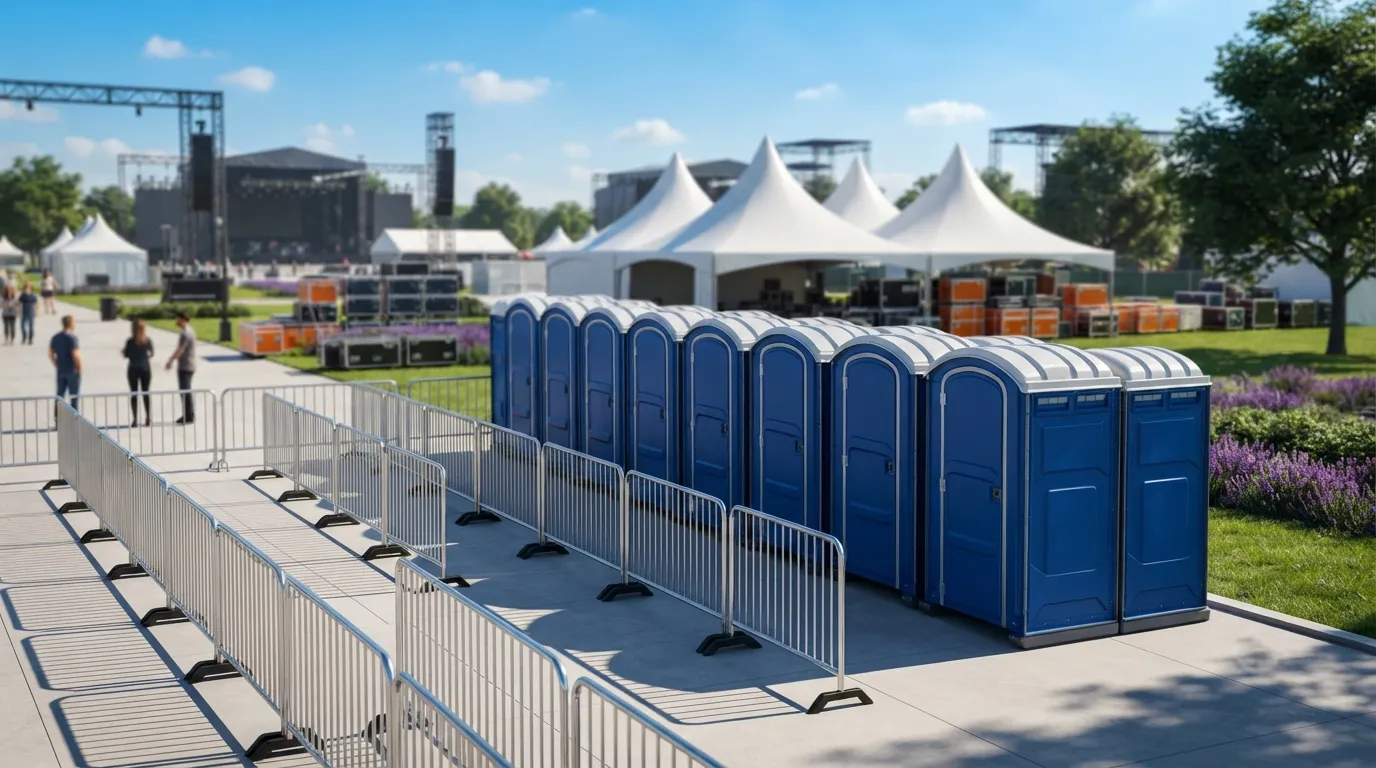
How Do Flushable Porta Potties Work?
A deluxe flushable porta potty adds a small onboard freshwater reservoir and a foot-pump or pressurized flush that pushes a splash of water into the tank after each use, cutting odor and giving a more residential feel. The waste still goes into the same style of sealed holding tank as a standard unit; the flush just adds water on top rather than plumbing it out. These run higher than a standard unit, generally 85 to 1200 dollars a day depending on features and rental length, and they show up most often at weddings and upscale events rather than job sites. An ADA accessible porta potty can come in this flushable configuration too, and ADA Standards section 304.3.1 calls for a 60 inch turning circle inside, with section 404.2.3 requiring a 32 inch clear door opening so a wheelchair can get through. If you're clustering units for an event, ADA Standards section 213.2 says at least 5 percent, and never fewer than one, needs to be accessible.
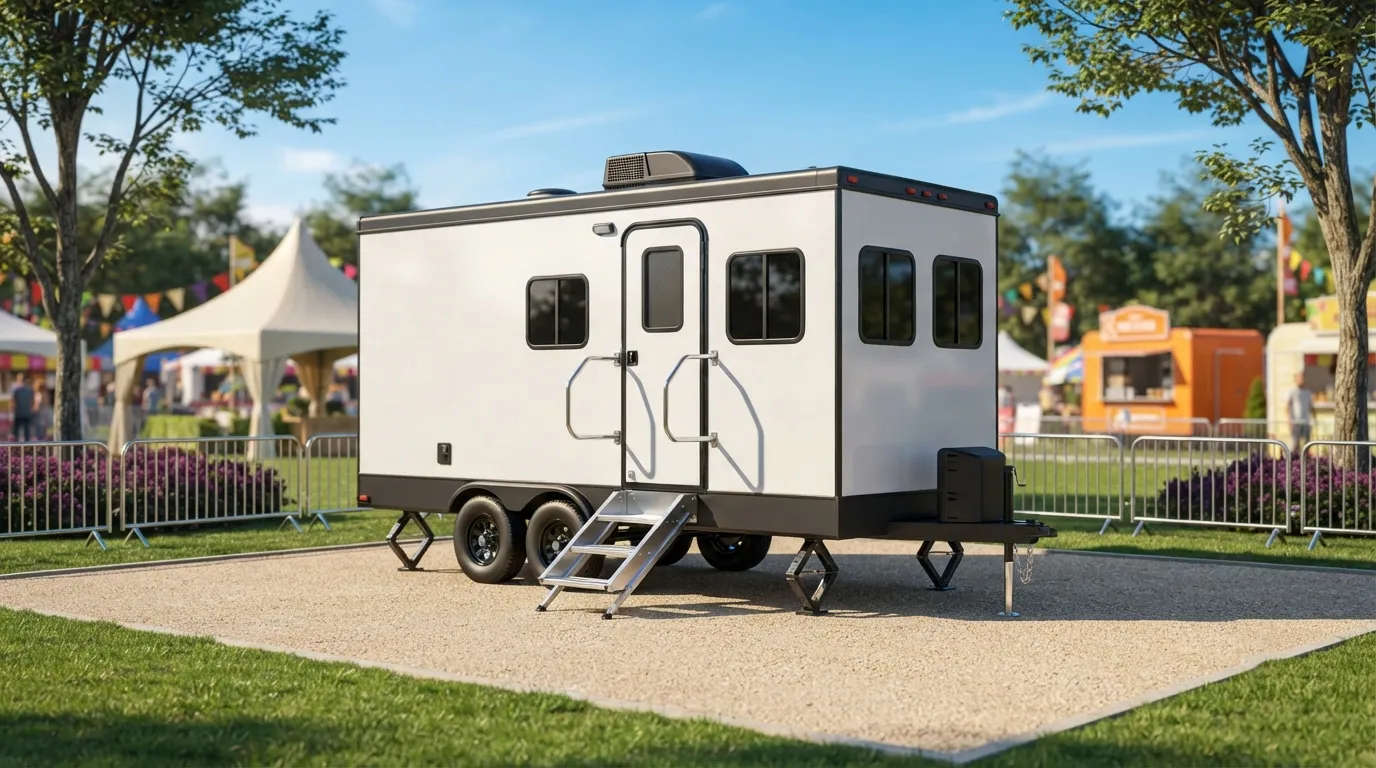
How Do Camping Porta Potties Work?
Camping units work the same way as job-site units, just smaller and self-contained for one or two people rather than serviced weekly on a big rotation. Some campers rent a standard unit for a weekend trip, others go with something closer to a marine-style toilet, but the core mechanic doesn't change: a sealed tank, a chemical treatment, no water hookup needed. For anyone hosting a backyard event or a multi-day gathering in Warwick, event restroom rental planning usually starts with headcount and duration, similar to what a porta potty rental checklist walks through. Compare that to septic systems at a fixed property: a residential tank, typically pumped every 3 to 5 years depending on tank size and household size, works on a completely different principle, storing and partially treating wastewater on-site rather than hauling it. Warwick Porta Pros handles both ends, from septic pumping service at a house to portable units at a weekend campsite or festival grounds.
Rental Pricing Snapshot
| unit | day | week | month |
|---|---|---|---|
| standard | 100-350 | 130-500 | 125-325 |
| ada | 200-400 | 120-240 | n/a |
| deluxe | 85-1200 | 150-290 | n/a |
What chemical goes in a porta potty?
Most units use a blue dye and deodorizer blend with enzymes or bactericide that breaks down waste and masks odor between services. It's not the same as septic tank cleaning chemicals, which target a fixed in-ground tank rather than a portable holding tank. Warwick Porta Pros restocks chemical at every scheduled pump-out.
How often does a porta potty get serviced?
The baseline is one visit per week for up to 10 users over a 40 hour week, per ANSI/PSAI Z4.3. Busier sites or events need more frequent service. Check how often are porta potties cleaned for details on scaling that up.
Do porta potties need water or electricity?
No. Standard units run entirely on the holding tank and chemical system, no hookup required. That's why they work on raw land, at a construction pad, or 13.8 miles away in East Providence just as easily as inside Warwick city limits.
Can I rent a portable sink without a toilet?
Yes. A portable sink rental stands alone and often gets paired with existing restrooms to meet handwashing needs under handwashing requirements. Food vendors and painting crews are common renters.
How many porta potties do I need for a job site?
It depends on crew size, per OSHA 1926.51(c) ratios covered on how many porta potties do I need. Twenty workers or fewer generally means one unit; add units as headcount rises past that threshold.
Next step
Get a delivery date
Tell us the address, the dates and the headcount. We size the order and confirm the route.